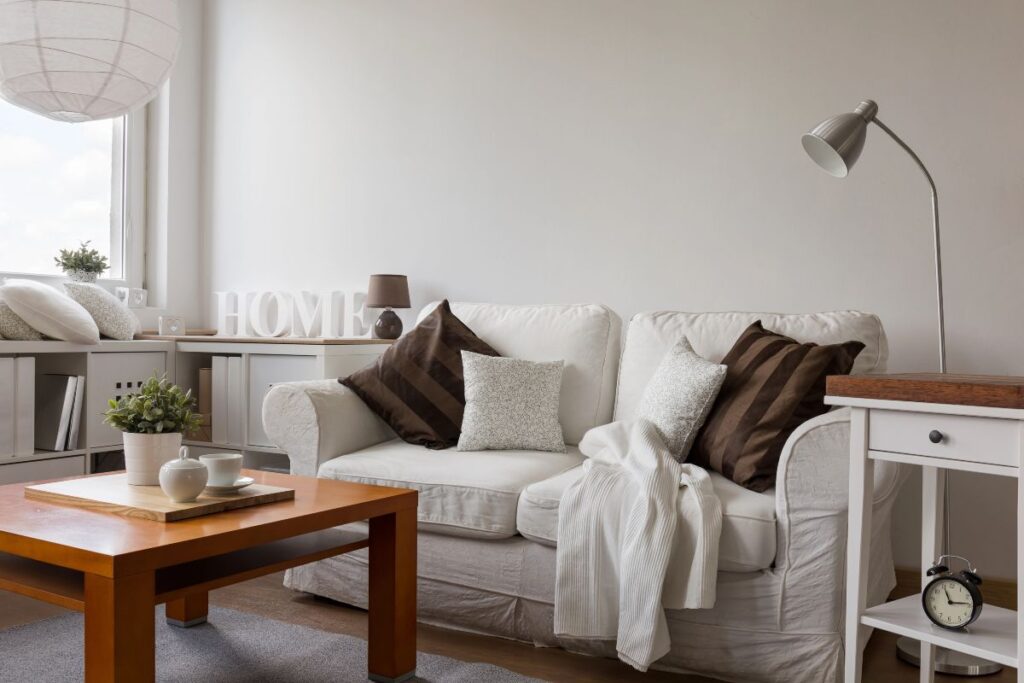
To make a small living room feel cosy without making it feel cramped, focus on warm lighting, soft textures, correctly sized furniture and a simple layout with breathing room. Avoid filling every surface or corner. The aim is to make the room feel warmer and more comfortable, not fuller.
Small living rooms can actually be easier to make cosy because the space already feels naturally intimate. The trick is adding warmth without adding clutter.
Quick ways to make a small living room feel cosier
Use warm lamps instead of relying only on a bright ceiling light, add soft furnishings such as throws and cushions, choose furniture that suits the proportions of the room and keep surfaces relatively clear.
A rug can help define the seating area, while warmer colours and softer lighting make the space feel more inviting without taking up any extra room.
1. Use warm lighting instead of one harsh ceiling light
Lighting makes one of the biggest differences to how cosy a small living room feels.
A bright overhead light can make a room feel flat and exposed, especially in the evening. Instead, try using several softer light sources around the room.
A floor lamp beside the sofa, a table lamp on a side table or a small lamp in a darker corner can create a much warmer atmosphere.
Warm white bulbs generally feel softer than very cool white lighting too.
2. Choose the right furniture for a small living room
Furniture that is too large can quickly make a small room feel crowded.
That does not mean everything needs to be tiny, though.
A comfortable sofa that fits the space properly is usually better than several smaller pieces squeezed into the room.
Look for furniture with slimmer arms, raised legs or built-in storage. Ottomans and footstools with hidden storage can be especially useful because they do more than one job.
3. Add soft textures without adding more clutter
Texture helps a room feel cosy without taking up much physical space.
Throws, cushions, curtains and rugs can soften a room far more effectively than filling shelves and surfaces with extra decorative items.
You do not necessarily need to buy anything new either. Moving cushions, throws or lamps between rooms can completely change how a space feels.
For more budget-friendly ideas, see my guide to making your home feel cosy without spending a fortune.
4. Use a rug to make the seating area feel more inviting
A rug can instantly make a small living room feel softer and more pulled together.
Try to avoid choosing one that is too small.
Where possible, the front legs of the sofa and chairs should sit on the rug. This helps the furniture feel connected rather than scattered around the room.
A larger rug can actually make a small space feel more settled than a tiny one floating in the middle of the floor.
5. Make a small living room cosy without making it cluttered
Cosy does not mean covering every surface.
Too many decorative objects, cushions or pieces of furniture can quickly make a small room feel busy rather than inviting.
Keep frequently used surfaces fairly clear and give everyday items somewhere specific to live.
Storage baskets are useful for blankets, remote controls, chargers, toys and anything else that tends to migrate around the room.
6. Use warm colours in smaller doses
You do not have to repaint the whole living room to make it feel warmer.
Warm neutrals, earthy colours, muted greens, soft pinks and terracotta tones can all make a room feel cosier.
Try introducing them through cushions, throws, lampshades, artwork or a rug.
This is particularly useful if your walls are white or neutral and the room currently feels a little flat.
7. Move furniture slightly away from the walls
Pushing everything tightly against the walls can sometimes make a small living room feel less relaxed.
If space allows, move the sofa or chairs forward slightly.
Even a few centimetres can make the furniture arrangement feel more intentional.
Try positioning seating around a clear focal point such as a fireplace, television, coffee table or window rather than simply lining everything around the perimeter.
8. Use vertical space instead of filling the floor
When floor space is limited, use the walls.
Tall shelving, wall-mounted storage and artwork can add personality without taking up valuable room.
Just avoid filling every available wall.
Leaving some empty space helps prevent a small living room from feeling visually crowded.
9. Make your small living room feel cosier in the evening
A room that feels pleasant during the day can feel completely different once it gets dark.
Take a look at the room in the evening and notice which areas feel cold, harsh or empty.
You may only need a lamp in a dark corner, softer lighting beside the sofa, curtains drawn earlier or a throw within easy reach.
Battery candles or small decorative lights can also add warmth where a full lamp is not practical.
10. Leave some breathing room
One of the easiest ways to make a small living room feel better is simply to stop filling every available space.
A little empty floor space and a few clear surfaces help the room feel calmer.
Choose fewer pieces that you genuinely like rather than trying to decorate every corner.
A cosy room should feel comfortable, not crowded.
What colours make a small living room feel cosy?
Warm neutrals such as cream, beige and taupe create a soft base, while muted green, blush pink, terracotta and earthy brown can add warmth.
You do not have to use dark colours across the whole room.
Adding warmer shades through soft furnishings, artwork and accessories is often enough to change the atmosphere without making a small space feel enclosed.
How do you make a small living room cosy without clutter?
The easiest way is to add warmth through lighting, texture and colour rather than adding more objects.
Use lamps, throws, cushions and a rug, but keep surfaces relatively clear and choose furniture that suits the size of the room.
Storage that doubles as furniture can also help keep everyday clutter out of sight.
What makes a small living room feel cosy?
A small living room feels cosy when it has soft lighting, comfortable furniture, warm colours, tactile fabrics and a layout that feels relaxed rather than overcrowded.
You do not need a large budget or lots of accessories.
Start by removing anything that makes the room feel cramped, then add warmth where the space actually needs it.
Small rooms already have a naturally intimate feel, so a few well-chosen changes can make a surprisingly big difference.
